The customer chooses alone.
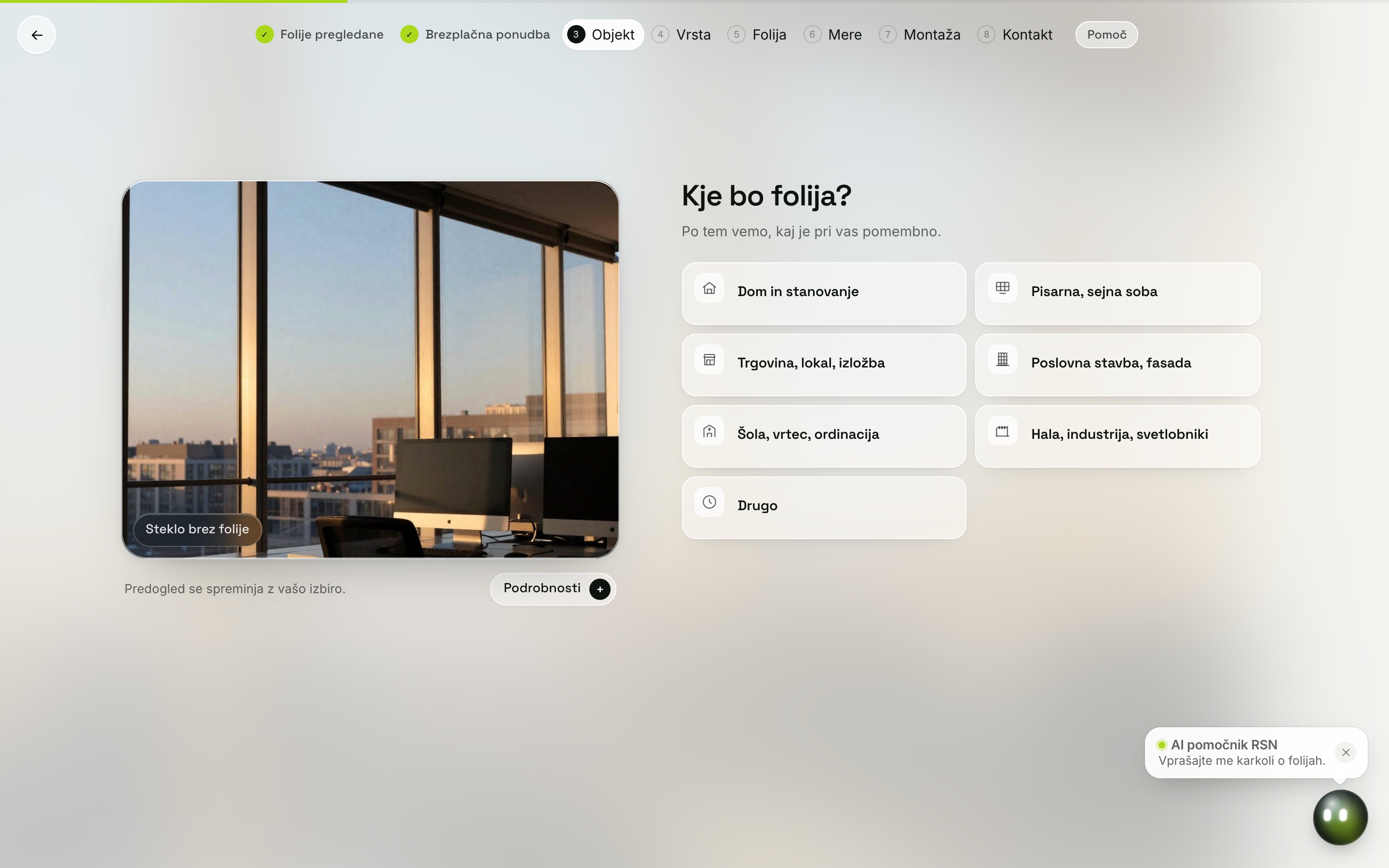
On the site they pick the building type, the film type and the film, and enter the window measurements. For the first time, sales gets everything it needs, with no phone call.
Window film installation in Trzin. Two projects: a new website that shows the customer which film is right, and an app that cuts the film with the least waste.
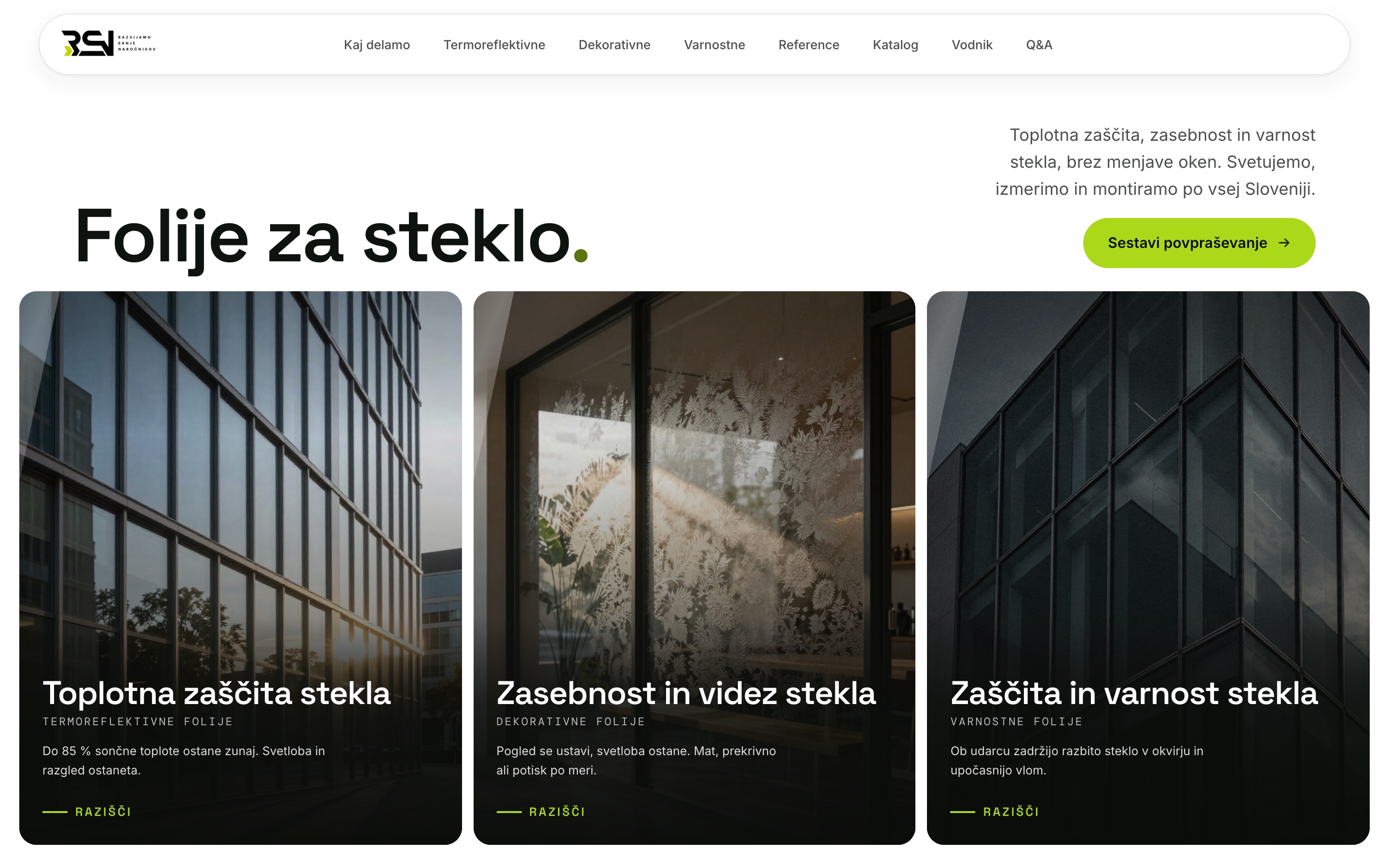
The difference between a film that reflects heat and one that holds shattered glass together is in the technical data sheet. Customers don't read it, so they call.
RSN Media in Trzin installs solar, security and decorative window films: for homes, offices, shops, schools and warehouses.
Customers had to call and ask which film, how much it costs, what's even possible. Everything by hand, every call from scratch.
A site that shows the difference before the customer calls, and prepares the inquiry so it's clear from the first message what they need.
Filmed the same day. Slide forward and the old rsn.si turns into the new site.
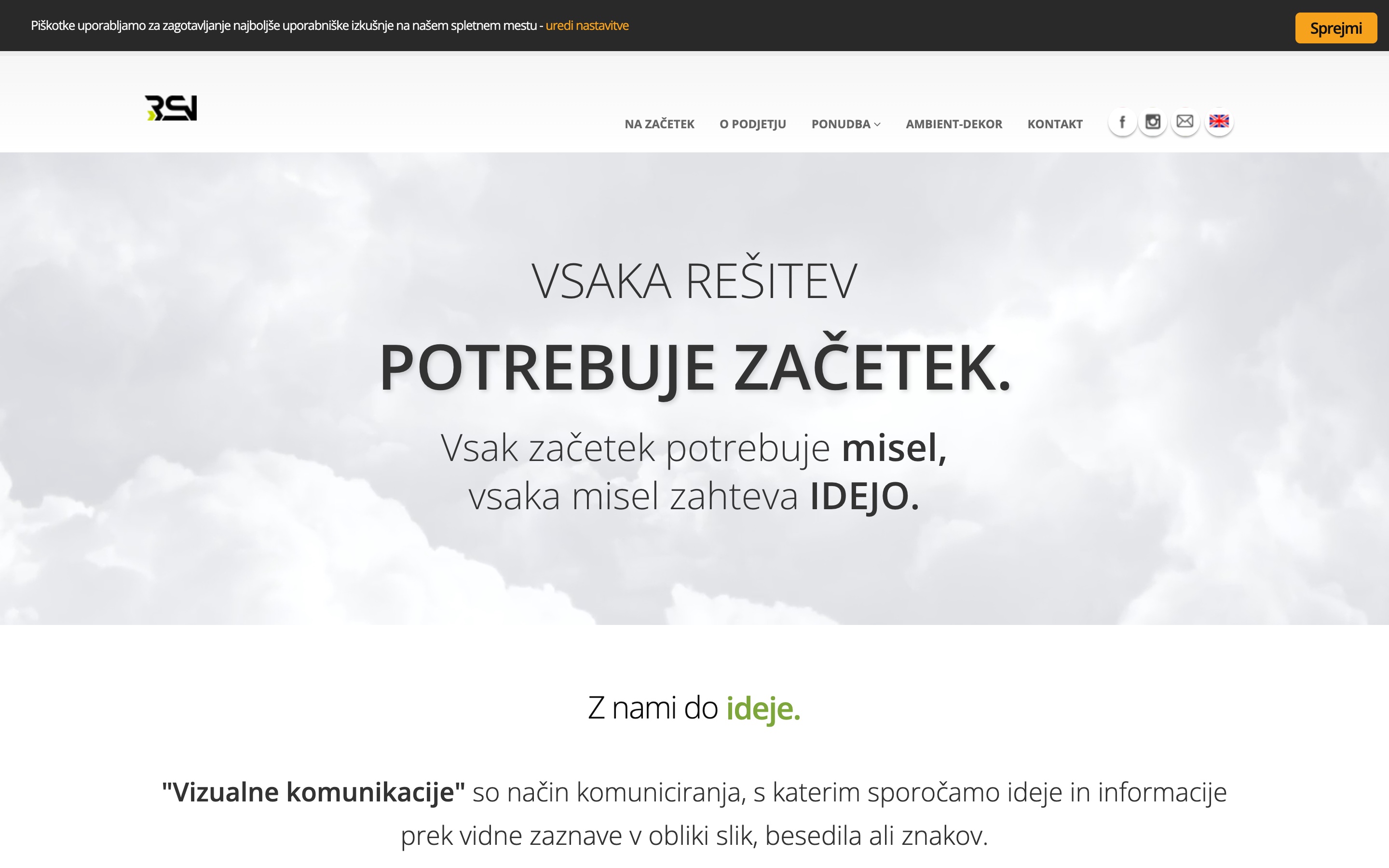
BeforeA generic slogan and icons for every service. Someone looking for window film doesn't know if they're in the right place.
NowWindow films, three types each with its own problem, and a path to an inquiry right on the first screen.
Only numbers you can check on the site or in the system.
days from the restart to the full website
September 7 to 24, 2026steps in which the customer builds an inquiry
configurator with 3D viewfilms in the catalog, values from the manufacturer's data sheets
26 families, filters, comparisonroll utilization in a real cutting system calculation
run from Jun 2026The website and the cutting app are two projects, but one path. We follow a single order: the same film and the same measurements go through every step.
On the site they pick the building type, the film type and the film, and enter the window measurements. For the first time, sales gets everything it needs, with no phone call.
Sales gets the film, measurements, installation and contact details in one place. No more calling back for missing information.
Sales enters the film and measurements into the cutting app. The app has everything it needs for the calculation: film, measurements, number of pieces.
The app tries different layouts, rotates pieces and picks the roll width. A person confirms the plan.
A PDF for the installer, a DXF for the machine, the run gets saved. From a click on the website to a piece on the machine, the same information runs through it all.
The site step by step, as the customer sees it: from the homepage to the inquiry, and finally the cutting system already working in the company.
Window films, three types, each with its own problem: heat, privacy, security. No generic slogans.
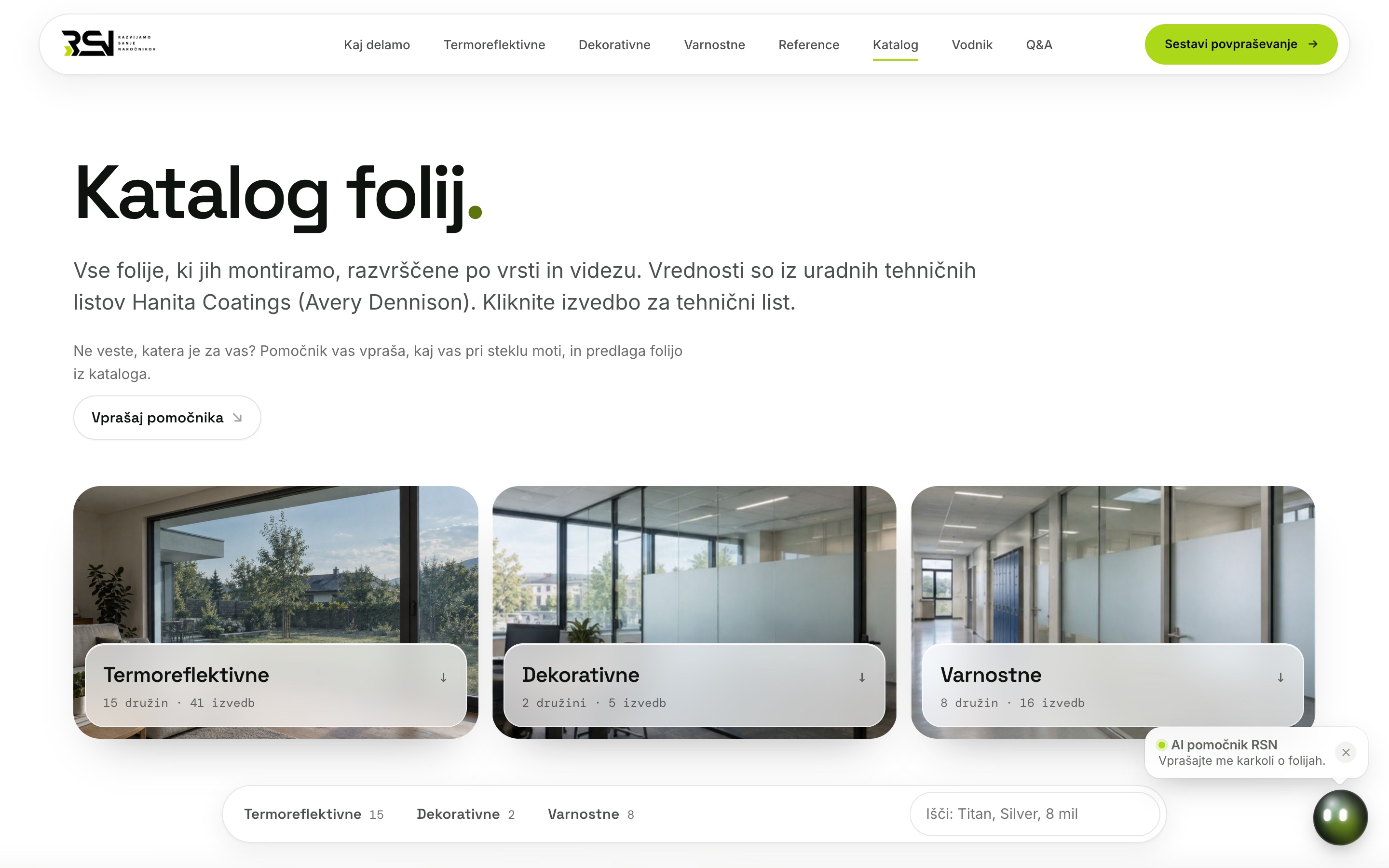
Each type has a live 3D view of the glass and numbers from the data sheet: how much heat it reflects, how much UV it blocks, how many years it lasts.
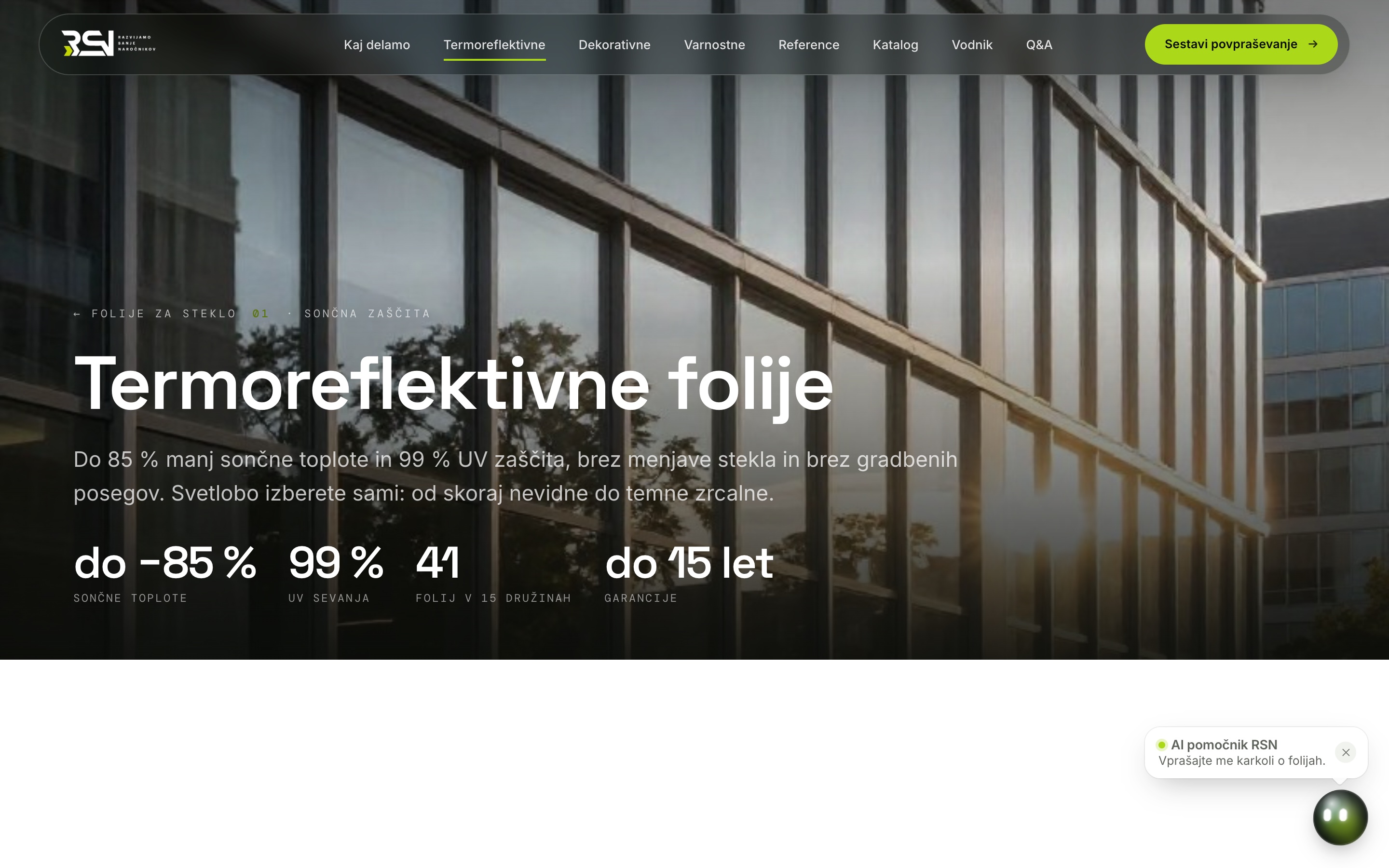
Filters by type and look, comparison of up to three films, data sheets. Values are official, from the manufacturer's database.
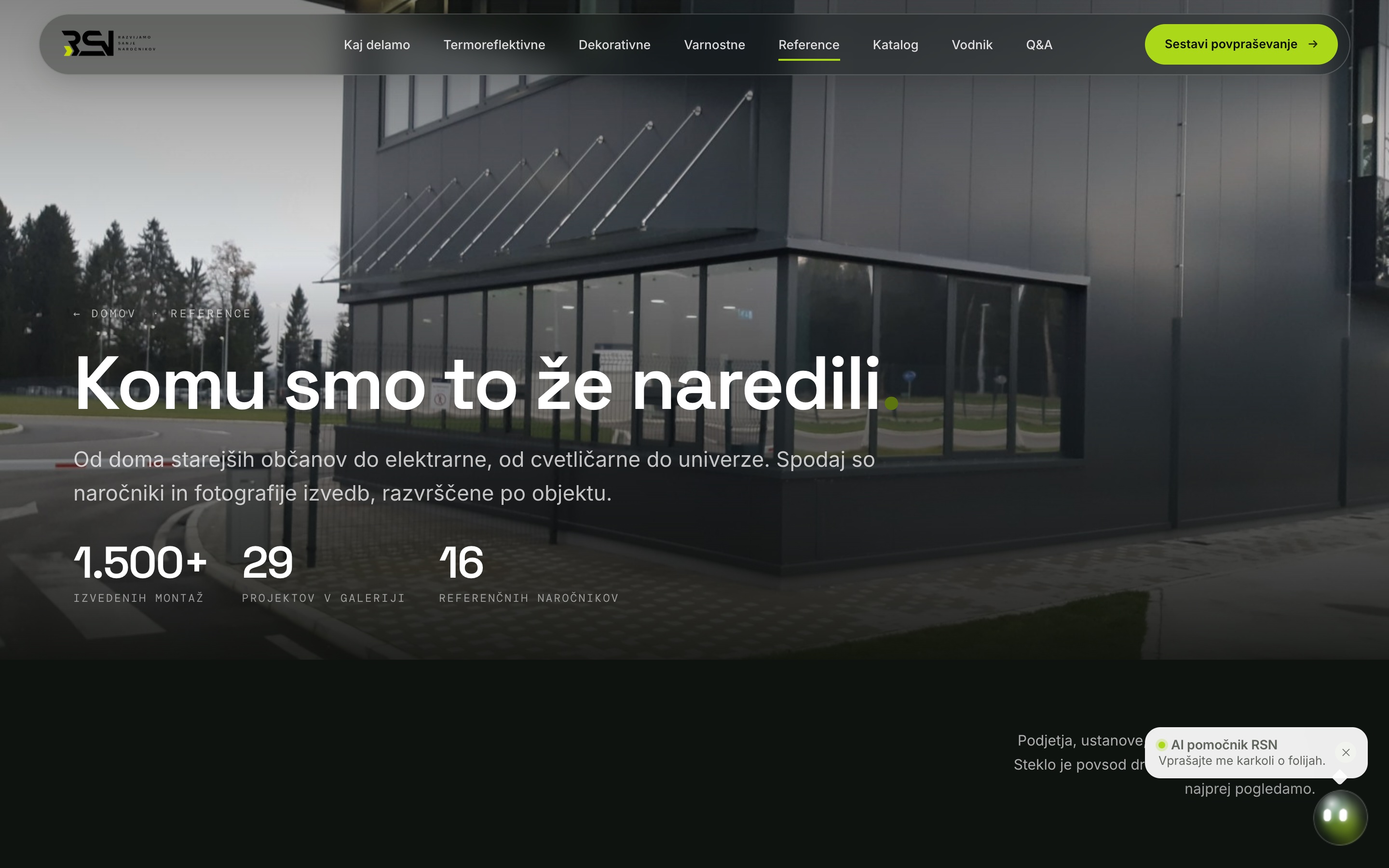
29 projects with photos and descriptions from RSN's own records, sorted by building type.
Six steps: building, type, film, measurements, installation, contact. On the right, the chosen film shows live on the glass. At the end, the inquiry with all the details goes to sales by email.
The app that's been running at RSN since June: an order comes in, the system arranges pieces on the roll, a person confirms it, the plan goes to the machine.
Film is bought in rolls of three widths. Figuring out how to arrange pieces so as little as possible is left over used to be done by hand, with Excel and a calculator.
Sales enters the pieces (measurements and quantities), picks the film and the available roll widths: 122, 152.4 or 182.9 cm.
The algorithm tries several layouts, rotates pieces when needed, and picks the width or combination of two widths where waste is lowest.
A person confirms the plan. The app prepares a PDF for the installer, Excel and DXF for the machine, and the cut gets logged.
When the system started combining two roll widths (152.4 and 122 cm) in June, the same order used less film.
In testing with combined widths, waste dropped from 34 to 19%. Source: system runs, June 9 to 11, 2026.
It didn't happen in one move. First the cutting system, then the search for the right direction for the site, then a fresh start and 17 days of building.
Film roll-cutting optimization runs in the company every day. Fixes in June and July after the first weeks of use.
Five design directions, none right for RSN. Instead of patching a bad direction: a stop.
The site from scratch, with one goal: the customer must understand the difference between films without calling.
Site online by the second day. First presentation to RSN's director, edits based on his feedback.
Real photos of installations, the manufacturer's library, AI only where there's no photo available. A layer for search engines.
78 films in one database, a glass measuring guide, and a six-step inquiry.
All ten pages, the catalog, configurator and 3D view live, handed over to the directors.
For those curious how it's built.
The view runs in the browser, no plugins. For each film type it shows its problem: heat, privacy or impact.
The catalog, comparison and configurator all read from the same database. A new film gets added once and appears everywhere.
Page descriptions, data for Google, a sitemap, and a file for AI search engines.
Lighthouse on mobile: 71 before, 97 now.
A web interface for input, calculation on n8n, the plan as PDF, Excel and DXF, and a record of every run. Fixes in June: combining widths, spacing between pieces, checking for oversized pieces.
The site with the catalog, configurator and 3D view is built. The cutting app has been running in the company every day since June.
Do you have a similar problem: customers call with every question, and the data lives in people's heads and Excel? Let's talk.
Let's start your project together